Who was it who told you?
Was it a classmate, a stranger, a teacher, a relative?
Who was it who told you, that there was something wrong with you – with the shape of your body, or the texture of your hair, or the color of your skin, or your accent, or your gender, or your country of origin?
Did you read it in a book, or see it in a television advertisement? Did you hear it from your parent, or your pastor, or your president?
Who was it who first told you, that you should be ashamed of your self?
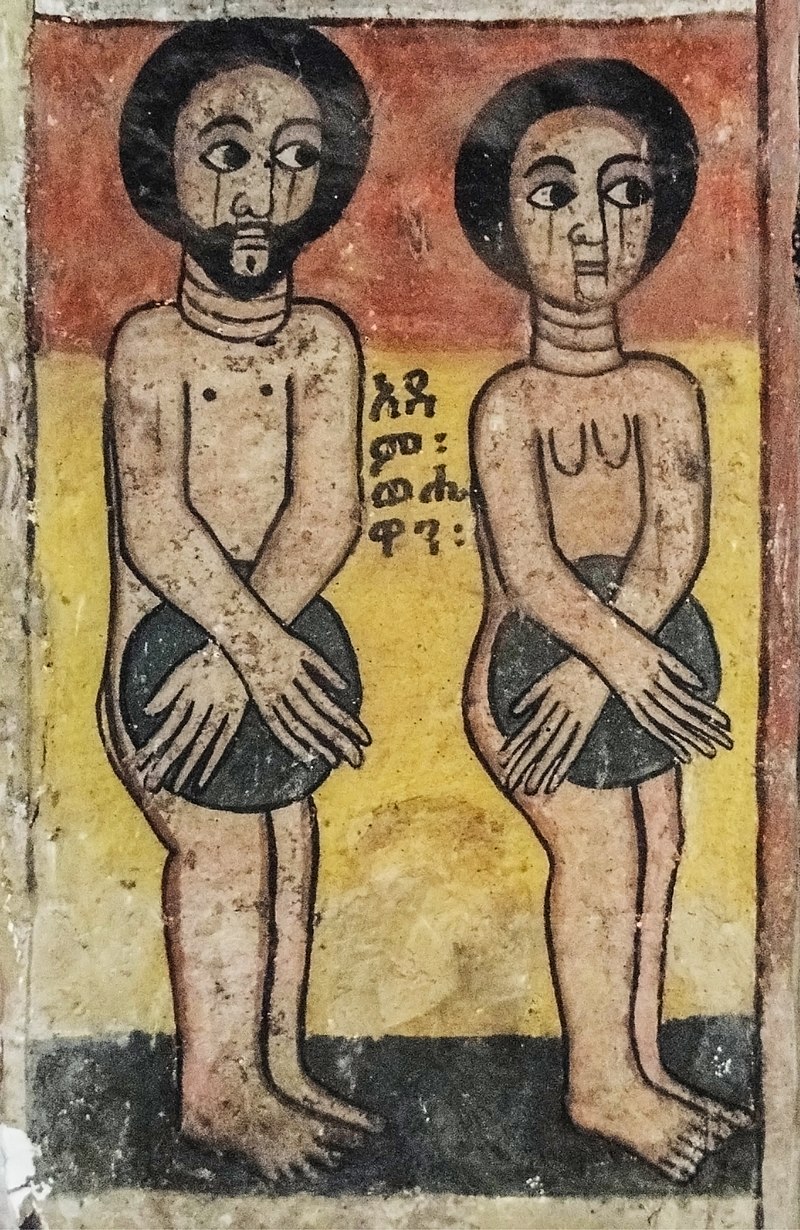
The Book of Genesis tells us that, in the beginning, God created all things, and pronounced all things to be good. But Adam and Eve – which is to say, all of us – desired to know both good and evil. Tempted by the serpent, they tasted the fruit of the tree. And so they learned to judge. To divide the world up, into the good and the not-so-good. To compare. To contrast. To condemn. And no sooner had they done that, then they began to fear: perhaps they themselves were not-so-good.
So God comes walking in the garden, and Adam hides. Why are you hiding from me? God asks. I am ashamed because I am naked, Adam replies. And God asks,
Who told you that you were naked?
And I imagine God thinking, because you didn’t hear it from me.
But Adam and Eve – which is to say, all of us – have fallen into the serpent’s trap.
As a parent, I wish I could protect my children from that fall; that no one would ever make them feel ashamed of their appearance, or their abilities. I tell them daily that I love them, and that I am proud of them, in the hopes of somehow building up their immune system against the serpents of self-doubt. And I am aware, at the same time, that some folks have more of those serpents to battle than I do. How early must we vaccinate our children against racism? or homophobia, or sexism, or ableism, or xenophobia? How often do they need a booster shot of love and affirmation?
Every day, our children venture forth into a society that relentlessly judges them. How we teach them that in God’s eyes – which is to say, in reality – they are not naked, but beautiful?
After all, God forbid us to eat that fruit. God forbid, that we should be ashamed of our wondrously created selves. God forbid, that we should see our neighbors, or ourselves, as anything other than beloved. God forbid, that we should see God’s creation through the serpent’s eyes.
Who tells you who you are? Which voice do you believe?
Which brings me to another Bible story.
John the Baptist invites the people of Israel to come to the River Jordan to confess their sins and be baptized. To come clean, both literally and figuratively. Jesus, too, comes to be baptized by John, to bare his soul before God. And as Jesus rises from the water, something happens. He sees something, and he hears something.
He sees the heavens being torn apart. He sees the Spirit of God coming right to him, like a dove – or a homing pigeon. And he hears a voice, that speaks to him, and says: “You are my Son, my Beloved. On you, my favor rests.”
The first part of that message – You are my Son – is actually a quote from the psalms. The last part – with you I am pleased – is a quote from the prophets. In between, there floats a single, new word: beloved.
You are Beloved.
With that word, God transcends all of our categories of good and bad, of worthy and unworthy.
After all, this is the very first chapter of Mark’s gospel. It’s the very beginning of Jesus’ story, not the conclusion. God’s love isn’t a reward for Jesus’ good deeds and faithful service. It’s just how it is. Jesus is God’s beloved.
Imagine, for a moment, that these words were for you. What if your story began with that voice? What if each and every day, began with those words? How would your life change, if you knew that this was true? That you were God’s beloved, and that was just how it was?
So now ask yourself: what makes you think it’s not?
You are God’s Beloved.
Don’t let anyone tell you otherwise.
Rev. Liza B. Knapp
Note: a version of this sermon was published by The Greenfield Recorder
All other rights reserved.
Image: Painting of Adam and Eve inside Abreha and Atsbeha Church, Ethiopia. Photo by Bernard Gagnon, CC BY-SA 3.0
 the Mystery and the Mud

